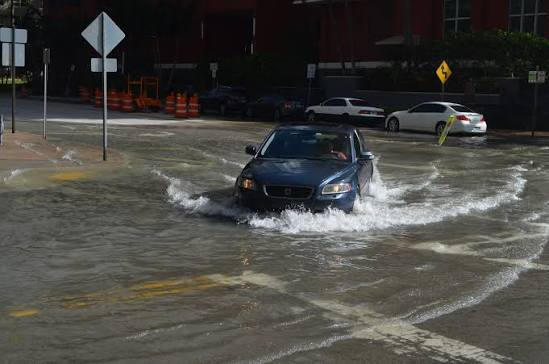
Flood Driving in Ivory Coast requires caution, as heavy rain can cover roads, hide potholes, and create dangerous conditions for Abidjan motorists.
Car Tips: How to Drive Safely Through Flooded Roads in Abidjan
Heavy rainfall can quickly change driving conditions in Abidjan. During Côte d’Ivoire’s rainy season, torrential rain can cause flooding, large potholes, and difficult road conditions, with some minor roads becoming temporarily impassable.
For motorists, Flood Driving Ivory Coast is therefore less about finding a way through water and more about knowing when to slow down, stop, or choose another route.
Check Conditions Before Starting
One of the safest ways to deal with flooded roads is to avoid encountering them in the first place. Drivers should check weather information before setting out during periods of heavy rain and consider delaying unnecessary journeys when severe conditions are expected.
The Met Office advises motorists to avoid starting journeys during heavy downpours where possible, use main roads and increase the following distance because wet surfaces reduce available reaction time.
This approach is particularly useful in Abidjan, where standing water can develop quickly after intense rainfall.
Never Assume Shallow Water Is Safe
Floodwater can make a road look deceptively manageable. The actual depth may be difficult to judge, while potholes, open drains, debris, and damaged sections of pavement can be hidden underneath.
Flood Driving Ivory Coast should therefore never mean automatically driving through water simply because another vehicle has managed to cross it.
Moving water presents an even greater danger. Official flood-safety guidance warns that relatively shallow moving water can be powerful enough to move a vehicle.
Slow Down When Roads Become Wet
If water is only beginning to accumulate and the road remains clearly passable, drivers should reduce speed and leave more space between vehicles.
Heavy spray from other cars can suddenly reduce visibility. Wet roads also increase stopping distances, while sudden steering or braking can make it harder to maintain control.
Drivers should use headlights when visibility is seriously reduced and remain alert for pedestrians, motorcycles, and other road users.
Protect the Engine and Electronics
Deep water can cause serious mechanical damage. If water reaches the engine’s air intake, it can enter the cylinders and potentially cause severe engine damage. Floodwater can also affect electrical components, braking systems, and other parts underneath the vehicle.
This is why a manufacturer’s published wading capability should never be treated as a general recommendation for crossing unknown floodwater.
For motorists comparing vehicles for Ivorian conditions, AfriCarGroup Auto24 can also help when checking vehicle specifications and different body styles.
Turn Around When Depth Is Unknown
The safest response to deep or uncertain floodwater is to find another route. This is especially important when water is moving, the road surface cannot be seen, or barriers and warning signs indicate that the road is closed.
Flood Driving in Ivory Coast requires recognising that reaching the destination is not worth risking an engine failure or becoming trapped in rising water.
Check the Car After Flood Exposure
If a vehicle has travelled through significant water, drivers should pay attention to unusual brake behaviour, warning lights, electrical problems and changes in engine operation.
If water has entered the cabin or reached important mechanical components, professional inspection may be necessary. Attempting to restart a vehicle that has taken in substantial water can make engine damage worse.
Conclusion
Flood driving in Ivory Coast requires careful judgement, particularly during Abidjan’s heavy-rain periods. Floodwater can hide potholes and drains, reduce vehicle stability, and cause expensive mechanical or electrical damage.
The safest strategy is simple: check conditions before travelling, slow down in heavy rain, avoid moving or unknown-depth water, and turn around when a flooded road cannot be safely assessed.
Have you experienced severe flooding while driving in Abidjan? Share your safest flood-driving tip in the comments.